

Green Propulsion Deal Pairs Two European Satellite Firms for 2027 LEO Mission
Hydrogen Peroxide System Marks First Chemical Propulsion Integration for Reflex Aerospace

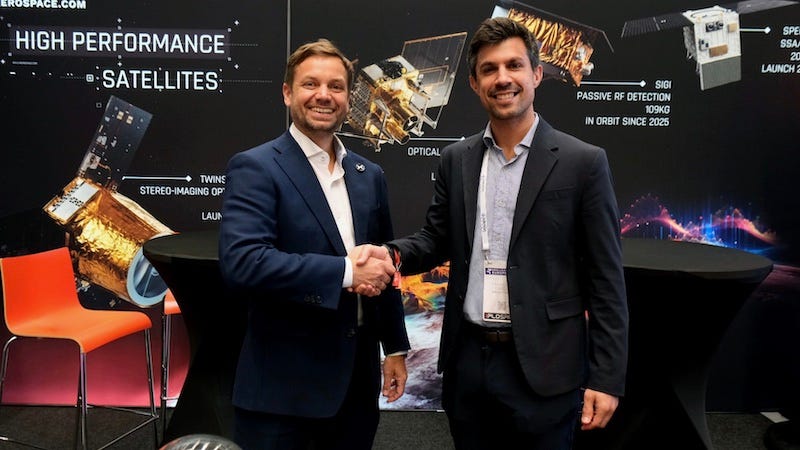
Arkadia Space and Reflex Aerospace have signed a commercial agreement to integrate Arkadia’s green propulsion system into an upcoming Reflex satellite mission targeting a Q2 2027 launch.
“Welcoming Reflex Aerospace to Arkadia’s customer portfolio is ... a strong validation of the reliability, maturity and versatility of our propulsion technology.”
Francho García, Arkadia Space
Under the agreement, Arkadia Space will supply a complete hydrogen peroxide-based propulsion system to support orbital maneuvers and end-of-life deorbiting for a low Earth orbit satellite with an approximate launch mass of 440 pounds (200 kilograms). The mission is scheduled to fly on SpaceX’s Transporter-20 rideshare program, with a development timeline of approximately 12 months from contract kickoff to launch readiness.
The contract marks the first time Reflex Aerospace will integrate chemical propulsion technology into one of its spacecraft platforms.
The propulsion package includes TRITON 5N monopropellant thrusters, 1.85-gallon (7-liter) propellant tanks, and flight electronics — all designed, developed and manufactured in-house by Arkadia Space.
Arkadia’s system carries in-orbit heritage from 2025, when the company flew its DARK propulsion module on SpaceX’s Transporter-13 mission with D-Orbit. That demonstration validated Arkadia’s end-to-end propulsion capabilities under operational space conditions.
“Welcoming Reflex Aerospace to Arkadia’s customer portfolio is an important milestone for our company and a strong validation of the reliability, maturity and versatility of our propulsion technology,” said Francho García, CEO and co-founder of Arkadia Space. “With MaiaSpace, Dassault Aviation, and now Reflex Aerospace, we can proudly say we are able to meet the propulsion needs of a wide variety of customer segments.”
García said the partnership also reflects a broader strategic intent. “This partnership reflects the strength of the European space ecosystem: European companies joining forces to build sovereign, competitive and more sustainable space capabilities for the future.”
Walter Ballheimer, CEO and founder of Reflex Aerospace, said the selection turned on supply chain and schedule considerations as much as technical fit. “Their flight-proven green propulsion technology, modular approach, and ability to adapt quickly to our mission requirements made them a strong partner for this mission,” Ballheimer said. “As a European and ITAR-free supplier with demonstrated in-orbit heritage, Arkadia Space enables us to move quickly while maintaining high technical standards and supply chain independence.
“The short lead time and flexibility of their system are key enablers for our ambitious development timeline,” he said.
Both companies are European-based and operate outside U.S. International Traffic in Arms Regulations, or ITAR — a factor Reflex cited as central to the selection. The agreement adds Reflex to a customer roster that also includes MaiaSpace and Dassault Aviation.
The satellite is scheduled to launch no earlier than the second quarter of 2027.