

Golden Dome’s Open Sub-Tiers: Sensor, Processing, and ISL Suppliers Positioned for SB-AMTI Awards
SpaceX Holds the $4.16B Prime and the $2.29B Data Backbone. The Payload Layer Is Still Open With Multiple Follow-On Awards Likely This Year

Signal Summary
The Space Force has contracted SpaceX to build the Space-Based Airborne Moving Target Indicator constellation and the data network backbone that carries its output, but the sensor payloads, radiation-hardened compute hardware, and inter-satellite link terminals that make the constellation operationally useful have not been awarded. The sub-tier access window is open now, before the down-select that follows prototype fielding. Executives and supply chain leaders with infrared, radio frequency sensing, onboard AI processing, or optical communications capability should be in teaming conversations with SpaceX and the eight competing SB-AMTI prototype performers this month, not after a formal solicitation is issued.
The United States Space Force (USSF) has contracted the prime layer of the Golden Dome sensor architecture. What it has not yet contracted is the payload layer that makes that architecture useful.
On May 28, 2026, the acting USSF Portfolio Acquisition Executive (PAE) for Space Based Sensing and Targeting (SBST) awarded SpaceX a $4.16 billion Other Transaction Authority (OTA) agreement for the Space-Based Airborne Moving Target Indicator (SB-AMTI) program. The award followed a competitive OTA prototype phase in which the Space Force had selected nine companies, including SpaceX, in April 2026 to develop SB-AMTI concepts. SpaceX subsequently won the primary fielding contract from that competitive pool.
Under the award, SpaceX is contracted to field an initial SB-AMTI satellite constellation by 2028. The Space Force’s official announcement noted that “while this OTA agreement establishes initial SB-AMTI capability, the Space Force anticipates issuing multiple awards in the coming year to drive competition across the architecture.” That statement is a procurement signal. Program managers and business development (BD) teams who are not already positioned have weeks, not months, to act.
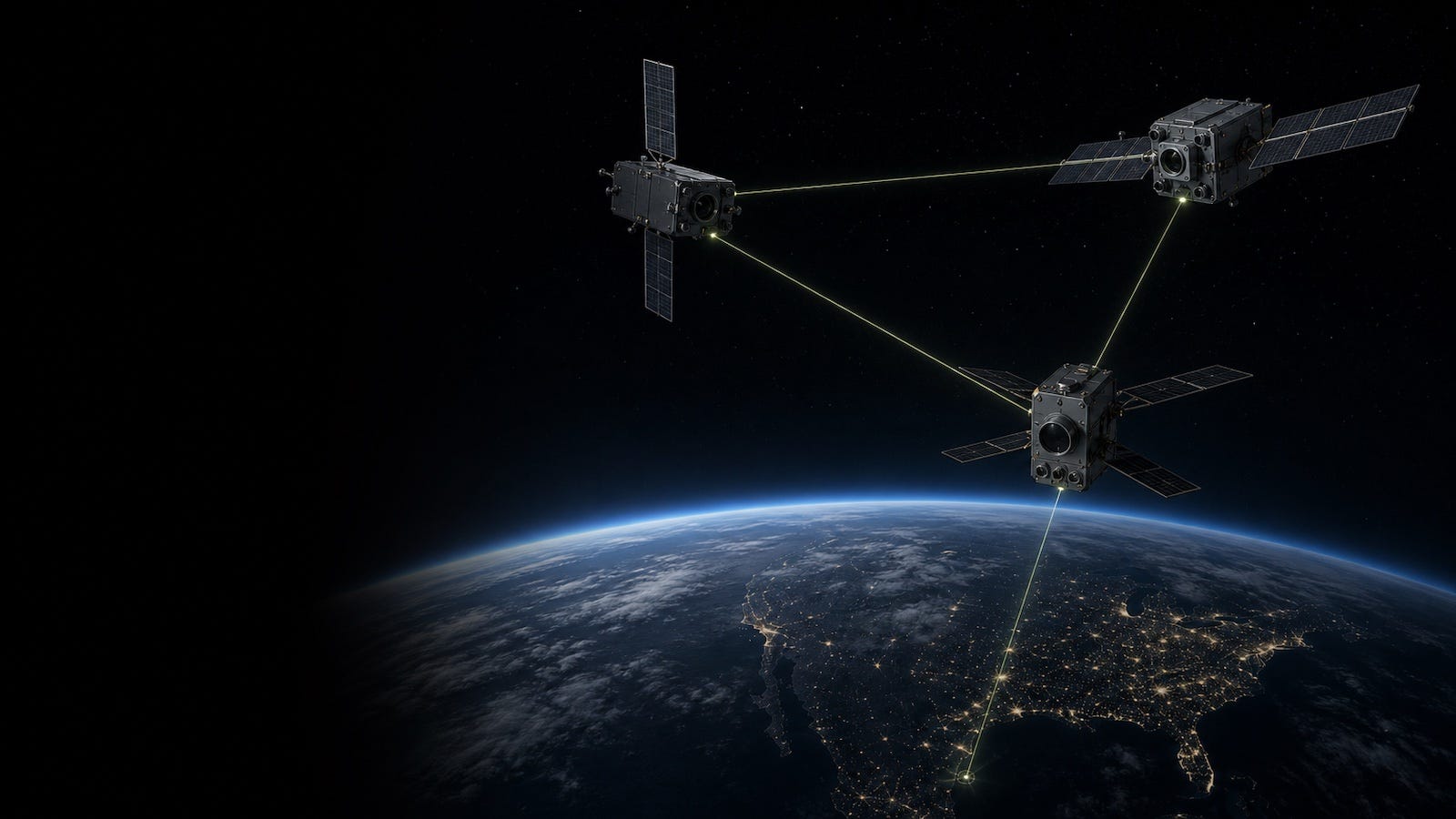
Separately, on May 26, 2026, Space Systems Command (SSC) awarded SpaceX a $2.29 billion firm-fixed-price OTA delivery order for the Space Data Network (SDN) Backbone, a proliferated low Earth orbit (LEO) satellite constellation designed to provide low-latency, high-capacity data transport for the Joint Force. SpaceX is required to deliver a fully operational SDN Backbone prototype by end of 2027. The backbone receives and routes the targeting data the SB-AMTI constellation generates. For that handoff to work, the SB-AMTI satellites must communicate with the backbone at the required data rates and protocol specifications, a defined interface requirement that shapes the entire sub-tier supplier stack.
The $13 billion allocated for missile defense and space programs in the Fiscal Year (FY) 2026 Defense Appropriations Act, the core funding base for Golden Dome’s near-term procurement activity, is fully appropriated. The prime spine of the architecture is under contract. The sub-tier access window is open now.
What the OTA Structure Opens
The SB-AMTI procurement is built on OTA contracting mechanisms, which give program offices significant flexibility to add performers at option exercise points and as requirements evolve, faster than the Federal Acquisition Regulation (FAR) process typically allows. The USSF’s explicit statement that it “anticipates issuing multiple awards in the coming year” for additional SB-AMTI architecture elements is not boilerplate. It reflects a deliberate program structure in which the initial SpaceX award establishes constellation architecture while follow-on awards build out the payload, processing, and link sub-tiers.
The SB-AMTI architecture requires several distinct capability sets: infrared and radio frequency (RF) sensing payloads, onboard processing to classify and track airborne targets, data transport to the SDN Backbone, and ground-based fusion and tasking infrastructure. Not all of those requirements are bundled into SpaceX’s initial prime award. Some will be procured as direct government contracts. Some will flow as sub-contracts through SpaceX’s constellation build. Both paths create access windows, but they require different engagement strategies.
For direct government award opportunities, the relevant office is the USSF PAE for SBST at Space Systems Command. For sub-contract access, engagement must begin now with SpaceX’s program team, before prototype hardware specifications are locked.
