

Global Microgravity Research Network Grows to 26 Institutions Across Four Continents
Axiom Space University Alliance Adds Members From 12 Nations

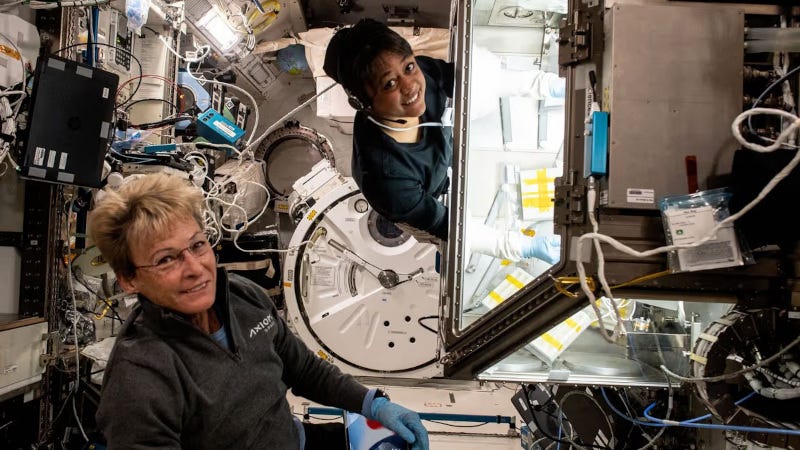
The Axiom Space University Alliance … an international network dedicated to advancing microgravity research in low Earth orbit … has grown to 26 institutions spanning four continents and 12 nations, with new members from Australia, India, Italy, New Zealand, Portugal, Spain, South Korea, Taiwan, Türkiye, the United Kingdom, the United States, and Uzbekistan.
“Through the University Alliance, Axiom Space is uniting the international research community driven to enable human progress.”
Dr. Lucie Low, Axiom Space
The University Alliance unites researchers, engineers, and students to support scientific research and technology development during the transition from government-led to commercially owned and operated space stations. Alliance membership spans a broad geographic and disciplinary range, including Korea Advanced Institute of Science and Technology (KAIST) — the first Alliance member from Asia — and, most recently, Middle East Technical University (METU) in Türkiye.
“Through the University Alliance, Axiom Space is uniting the international research community driven to enable human progress,” said Dr. Lucie Low, Axiom Space Chief Science Officer. “Together, Alliance members are taking the initiative to ensure microgravity research benefits everyone on Earth and our shared goals fulfill a scientific purpose to advance civilization.”
Current Alliance members include Adelaide University and the ARC Centre of Excellence in Plants for Space (Australia); Arizona State University, Cedars Sinai Medical Center, Georgia Institute of Technology, National Jewish Health, Rice University, University of Central Florida, University of Houston, University of Notre Dame, University of Pittsburgh, University of Texas at Austin, and University of Texas at El Paso (United States); Edinburgh University, King’s College London, and University of Northumbria (United Kingdom); Indian Institute of Science (India); Korea Advanced Institute of Science and Technology (South Korea); Middle East Technical University (Türkiye); National Central University (Taiwan); Turin Polytechnic University in Tashkent (Uzbekistan); University of Canterbury (New Zealand); Universidade de Lisboa and University of Porto (Portugal); Universitat Politècnica de Catalunya (Spain); and University of Rome Tor Vergata (Italy).
The Alliance is structured to support advocacy and collaborative scientific initiatives as commercial space stations begin to succeed the International Space Station. Member institutions contribute to the broader research community by identifying future research priorities, participating in international scientific initiatives, and strengthening national strategic positioning in emerging commercial orbital research programs. Axiom Space has previously flown hundreds of payloads to the International Space Station in partnership with institutions worldwide.
Working groups will be established within the Alliance to examine the current status, opportunities, and challenges across a range of research disciplines. Those findings will inform recommendations directed at policy makers, funding agencies, and industry stakeholders. The Alliance’s collaborative structure is intended to ensure that microgravity research and technology development remain inclusive and broadly accessible within the global space ecosystem.
Institutions interested in joining the Axiom Space University Alliance may contact research@axiomspace.com.