

GEMS2-Amethyst Commercial Weather Satellite Reaches Orbit
Achieves First Light, Begins Collecting Global Atmospheric Data

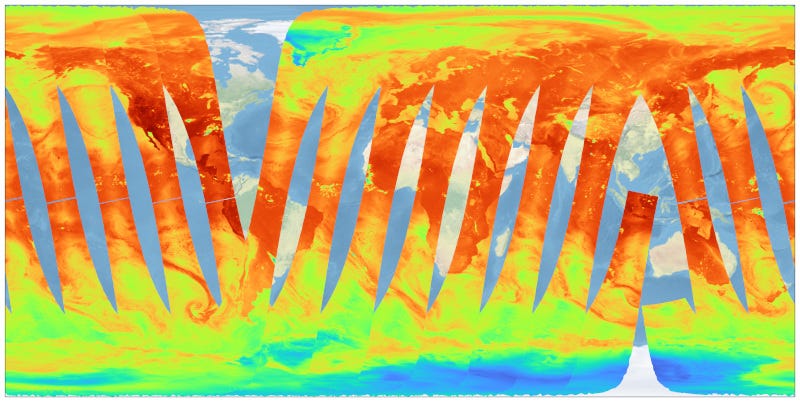
A commercial meteorological satellite built by Weather Stream Inc. has achieved first light, returning atmospheric observations from orbit for the first time.
“From forecasting severe storms to supporting military operations to helping the insurance industry assess risk, the observation gaps we are filling with GEMS2-Amethyst touch decisions that billions of people depend on every day.”
Michael Hurowitz, Weather Stream
The Boulder, Colorado-based company launched GEMS2-Amethyst on March 30 aboard SpaceX’s Transporter 16 rideshare mission from Vandenberg Space Force Base. The satellite has since reached a sun-synchronous orbit at nearly 373 miles (600 kilometers) altitude.
GEMS2-Amethyst carries a dual-band passive microwave radiometer designed and built in-house by Weather Stream’s Boulder team. The instrument measures three-dimensional atmospheric temperature and humidity profiles across a swath of nearly 1,243 miles (2,000 kilometers), providing near-global coverage approximately every 12 hours. The satellite bus was supplied by GomSpace, a Denmark-based spacecraft manufacturer. Projected operational life is three to five years. Payload calibration is underway ahead of data validation and delivery.
The mission advances a line of work Weather Stream began in 2019, when its GEMS1 satellite became the first commercial microwave radiometer to operate in orbit. GEMS1 measured atmospheric temperature only. GEMS2-Amethyst adds sensitivity to humidity and precipitation.
“Weather affects everything,” said Michael Hurowitz, CEO of Weather Stream. “From forecasting severe storms to supporting military operations to helping the insurance industry assess risk, the observation gaps we are filling with GEMS2-Amethyst touch decisions that billions of people depend on every day.”
Weather Stream sells GEMS data to government and commercial customers worldwide. Applications include weather forecasting, natural disaster response, defense operations, climate research, parametric insurance, and aviation planning.
The company said it plans to expand its commercial passive microwave capabilities through future GEMS2 missions alongside advanced sensor development and select strategic partnerships.