

From Lander to Lunar Prime
How Intuitive Machines Is Building a Moon Services Empire

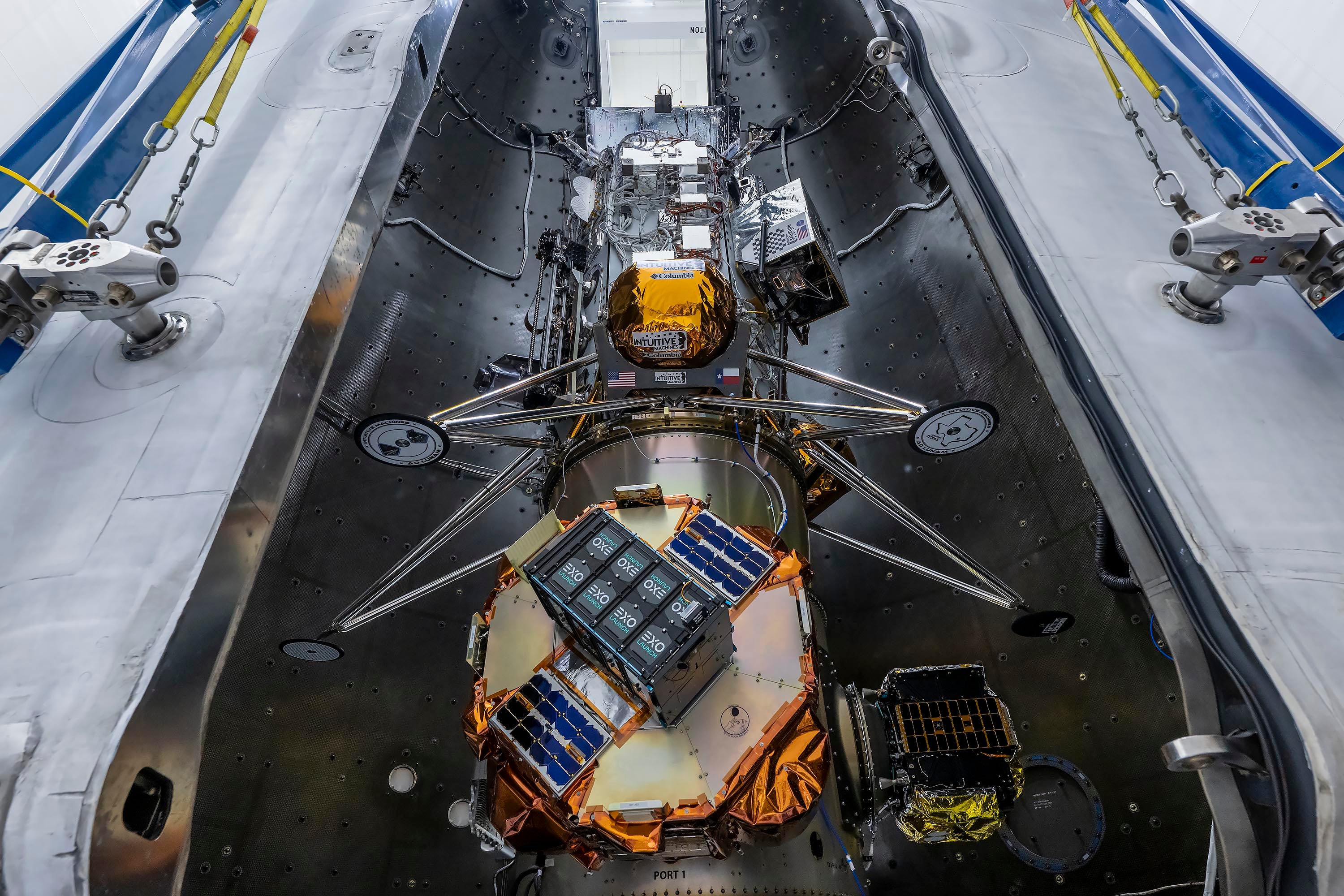
When Intuitive Machines’ Odysseus lander touched down at Malapert A crater on February 22, 2024, it marked the first American return to the lunar surface in 52 years. The spacecraft tipped over on landing and came to rest at a 30-degree angle, but it worked anyway—transmitting data for seven days and delivering NASA payloads to their destination. The mission made headlines as a historic achievement, the first commercial soft landing on the Moon.
Seven months later, Intuitive Machines secured a contract that dwarfed the entire IM-1 mission in scale and ambition. NASA awarded the company its Near Space Network Services agreement in September 2024, a firm-fixed-price contract with a maximum potential value of $4.82 billion over ten years. Where IM-1 delivered payloads once, NSNS promises recurring revenue as a telecommunications and navigation utility for the cislunar region—the space between Earth and the Moon.
The company’s trajectory since IM-1 reveals a deliberate transformation from lunar delivery service to infrastructure provider. In January 2026, Intuitive Machines completed its $800 million acquisition of Lanteris Space Systems, the former Maxar satellite manufacturing business with more than 60 years of heritage building spacecraft. The combined entity now operates with $850 million in annual revenue and a backlog exceeding $920 million. CEO Steve Altemus described the deal as creating “the next-generation commercial space prime contractor”.
This isn’t a story about landing on the Moon. It’s about what comes after—building the business case for a permanent lunar economy by providing the infrastructure on which other missions will depend. Whether Intuitive Machines can execute this vision remains an open question, but the strategy itself represents one of the clearest attempts yet to move beyond government-funded demonstrations toward sustainable commercial space services.
Proving the Model: IM-1’s Economics and Execution
The IM-1 mission cost approximately $118 million and took four years from contract award to lunar surface. By historical standards, that represents radical cost compression. Apollo-era missions ran into the billions when adjusted for inflation. Even robotic lunar missions funded entirely by NASA typically cost several hundred million dollars for comparable capability.
