

Florida, South Australia Agency Sign Deal to Link Spaceport Development
Agreement Covers Reentry Corridors and Cargo Transport, but the Two Sides Have Yet to Name a Project

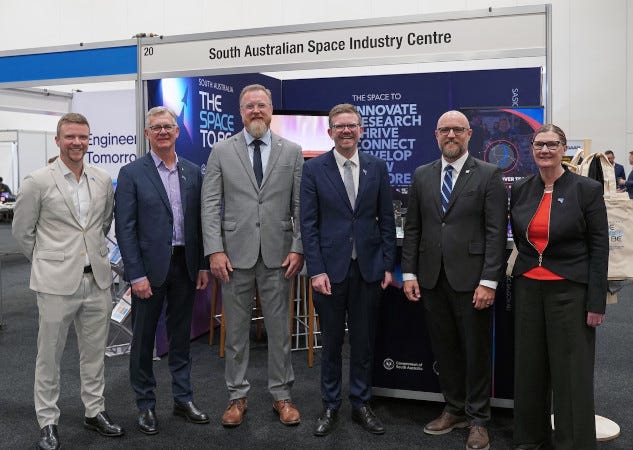
Space Florida and the South Australian Space Industry Centre signed a memorandum of understanding this week to cooperate on spaceport development and explore space-based cargo routes between Florida and South Australia.
“South Australia is emerging as a serious force in spaceport development and space trade, and this MOU lays the groundwork for a long-term relationship that will benefit both regions as that growth continues.”
Rob Long, Space Florida
The agencies announced the deal at the 19th Australian Space Forum in Adelaide, South Australia. South Australia’s Minister for Defense and Space Industries, Chris Picton, described it as an Australian-first partnership, according to a statement from his office. The agreement establishes what both sides call a framework for cooperation across areas of mutual interest.
The memorandum is not a binding contract. Neither side’s statement specifies funding levels, a project timeline or which spaceport development the two might pursue first.
Under the deal, Space Florida and SASIC said they will work together in five areas: spaceport development, space trade, economic development leads, research partnerships, and workforce and education programs. On spaceport development, Space Florida is contributing its financing and infrastructure tools, while SASIC brings its experience establishing reentry corridors in South Australia, according to the statements. The two sides also said they will study the business case for transporting goods and services between the two regions, including a potential demonstration mission built around launch operations in the United States paired with landing and recovery activity in South Australia. Neither statement specified a vehicle, timeline or cost for such a mission.
Picton’s office said South Australia offers launch trajectories distinct from Florida’s, and pointed to what it called rising global demand for launch capacity and constraints at existing spaceports as context for the deal, according to the statement. Neither claim was independently sourced beyond the release.
“Florida’s role in the global space economy has always depended on the strength of our partnerships, not just our launch capabilities,” said Rob Long, president and CEO of Space Florida. “South Australia is emerging as a serious force in spaceport development and space trade, and this MOU lays the groundwork for a long-term relationship that will benefit both regions as that growth continues.”
Picton said the agreement gives South Australia access to an established U.S. space hub. “Partnering with Space Florida connects South Australia with one of the world’s most established space ecosystems and strengthens Australia’s position in the global space sector,” he said. “This agreement builds national space capability and will advance Australia’s position as a global launch destination.”
SASIC has served as South Australia’s lead space-sector agency since 2017, according to its statement. Florida is home to Cape Canaveral, which Space Florida’s release describes as the world’s busiest spaceport.
Neither agency said when it expects to announce a specific joint project under the agreement.