

First Wild Strawberries to Be Grown in Orbit Under ISS Agriculture Contract
Redwire Greenhouse System Tapped for Inaugural Commercial Space Crop Mission

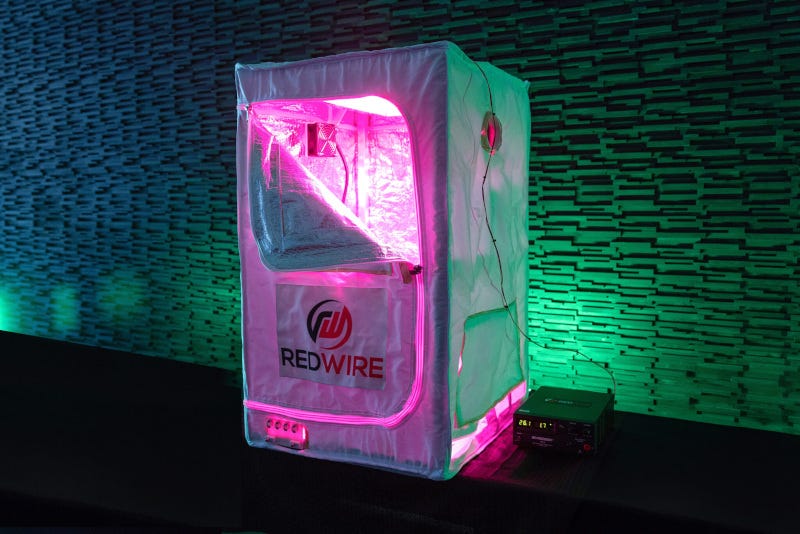
The first wild strawberries ever cultivated in orbit will be grown aboard the International Space Station under a contract awarded to Redwire Corporation by Luxembourg-based biotechnology startup Astrobiome Space S.à r.l. The mission will mark the inaugural flight for Redwire’s Greenhouse system — billed as the world’s first commercial space greenhouse.
“This contract with Astrobiome Space marks an exciting step forward in advancing critical technology for sustainable life-support systems beyond Earth.”
Marc Dielissen, Redwire
Under the contract, Astrobiome Space will use its proprietary biostimulant — developed from microbes adapted to extreme space environments — to cultivate wild strawberries in the Redwire Greenhouse aboard the ISS. The biostimulant is expected to enhance the fruit’s natural resilience and nutrient density, including higher levels of vitamin C, potassium, flavonoids, polyphenols, and antioxidants, bringing orbital crops closer to the nutritional quality of wild-grown produce on Earth.
“I dream of going to Mars knowing I can still taste the Earth,” said Vera Mulyani, Founder and CEO of Astrobiome Space. “The first strawberry grown in space will be tiny, but its flavor will carry the whole story of the forest and the turning seasons. With Astrobiome, we carry the living wilderness of our planet wherever we go.”
Astrobiome Space is set to begin growing test crops in the Greenhouse system on Earth in June, ahead of the ISS flight. No launch date for the orbital mission has been announced.
“This contract with Astrobiome Space marks an exciting step forward in advancing critical technology for sustainable life-support systems beyond Earth,” said Marc Dielissen, Executive Vice-President of Redwire Europe. “With our Greenhouse platform, we are not only enabling fundamental research, but we are also demonstrating the practical cultivation of fresh food in space — including crops such as strawberries and fungi. These capabilities are essential as we prepare for long-duration missions and future habitats, while also generating valuable insights to improve agricultural practices here on Earth.”
The Redwire Greenhouse is designed as a simple, scalable commercial platform for advancing crop science from laboratory settings to full production in space. The system leverages flight-qualified plant growth technology, including the Passive Orbital Nutrient Delivery System, or PONDS — devices developed in partnership with Tupperware Brands and currently operated by Redwire aboard the ISS. In addition to the Astrobiome mission, the Greenhouse platform is designed to support a range of institutional and commercial customers with plant science and industrial research goals.
The mission reflects a broader push toward developing viable food production capabilities for extended human spaceflight. Sustainable agriculture in microgravity is widely considered one of the central challenges for any crewed mission to the Moon or Mars, where resupply from Earth would be severely limited or logistically impractical. Growing food in orbit also offers a potential pathway for improving agricultural techniques on Earth, as researchers study how plants respond and adapt under microgravity conditions.
Redwire’s European operations are based in Luxembourg, where the company designs and develops advanced robotic arm systems supporting satellite servicing, refueling, payload management, and in-space manufacturing. The facility’s engineering expertise also drives innovation in debris capture and other emerging on-orbit servicing applications. The Luxembourg operations work alongside Redwire’s broader network of approximately 1,400 employees across Europe and North America.
Astrobiome Space is headquartered in Texas and Luxembourg and is engaged with research and government partners that include Japanese R&D organizations and agencies such as the European Space Agency and the Luxembourg Space Agency. The company’s technology draws on extreme-environment microbiology and advanced fermentation processes to develop bioactive compounds aimed at enhancing crop performance in space while delivering functional health applications on Earth.