

First Satellite in the “Orbital Cloud” Project Launched
DeStarlink Genesis-1 Satellite Launched December 10

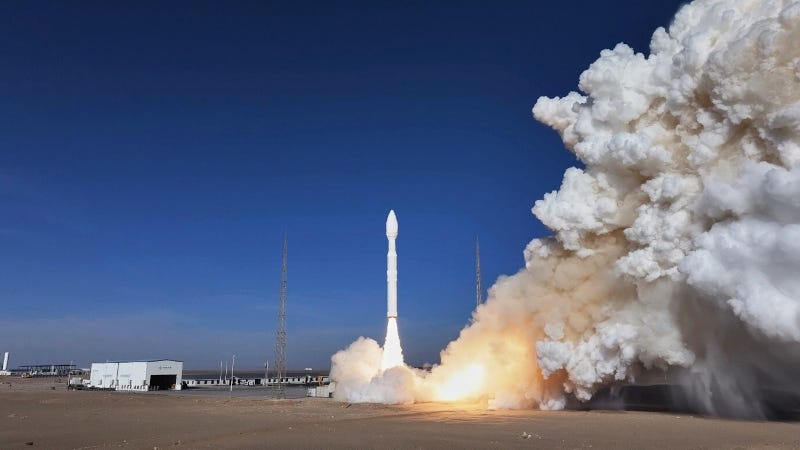
The first satellite in a planned orbital cloud network was launched December 10 by an unnamed launch provider. Through its collaboration with Orbit AI, PowerBank intends to contribute advanced solar energy systems and adaptive thermal control solutions, reflecting its broader shift toward digital asset, data center, and Real World Asset infrastructure, where solar power supports digital infrastructure deployments and high-growth AI markets. PowerBank’s contribution focuses on solar power and adaptive thermal technologies essential to future satellite’s “Execution Layer.”
“Today marks a transformative moment in the evolution of space-based infrastructure.”
Dr. Richard Lu, PowerBank
The DeStarlink Genesis-1 satellite is the first spacecraft in an orbital network being developed by Orbital AI, the first decentralized low-Earth-orbit network for global connectivity, and DeStarAI, a suite of orbital AI data centers powered by solar arrays and naturally cooled in space. Together, these systems form the Orbital Cloud, a unified infrastructure layer designed to enable sovereign, censorship-resistant connectivity and in-orbit compute services.
By 2032 projected size of Global Satellite Market is $615 billion. Additional opportunities span orbital infrastructure, in-orbit data centers, and satellite data services, representing a combined market potential of $115.64 billion over the next decade.
A core differentiator of the Orbital Cloud is its solar-powered execution layer. Satellites are equipped with lightweight, space-grade solar panels that harvest continuous sunlight during orbit, intended to enable round-the-clock AI inference, blockchain node operation, and on-board data processing. PowerBank’s future contributions will focus on supporting advanced solar modules, adaptive energy management systems, and thermal control solutions--components essential to powering the next generation of larger, higher-compute satellites in the constellation.
PowerBank’s collaboration with Orbit AI on the Orbital Cloud initiative reflects the company’s strategic expansion into high-growth digital infrastructure markets. The successful launch of Genesis-1 marks the first step in a multi-year roadmap of Orbit AI to establish a fully operational constellation of solar-powered, AI-enabled satellites that will redefine global connectivity and digital sovereignty from low-Earth orbit. At this time PowerBank elected not to make any additional investment in Orbit AI.
“Today marks a transformative moment in the evolution of space-based infrastructure,” said Dr. Richard Lu, CEO of PowerBank. “The successful launch of DeStarlink Genesis-1 validates our vision of supporting solar-powered solutions for the digital economy. This demonstrates how clean energy and advanced computing can converge to build resilient, globally accessible infrastructure beyond terrestrial constraints. PowerBank is proud to collaborate with Orbit AI in pioneering this new frontier where our solar energy expertise can help power the next generation of orbital computing and connectivity.”
Orbit AI plans to expand its constellation beginning in 2026, with larger-scale deployments anticipated through 2028–2030. PowerBank expects to continue as a key partner in these developments.