

First Airbus Pléiades Neo Next Satellite Will Be Launched Early 2028
Will Result in New Satellite Assets and Capabilities, Including 20-cm-Class Native Resolution

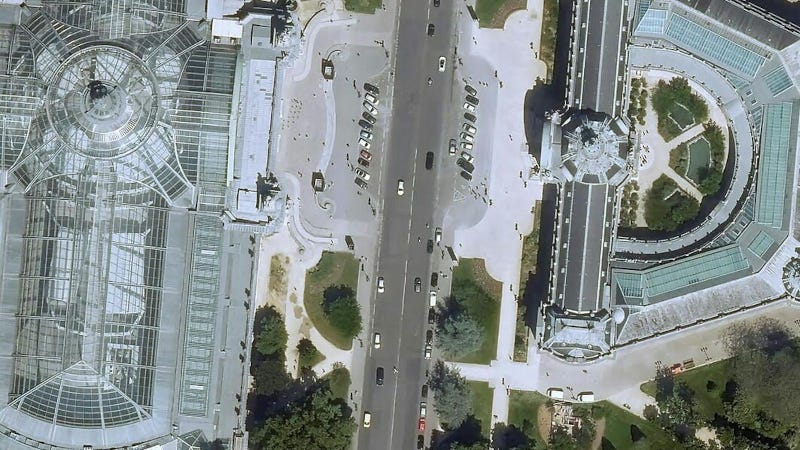
The first Airbus Pléiades Neo Next satellite is scheduled to be launched in early 2028 from the European Spaceport in Kourou, French Guiana. The satellite will be carried into orbit on an Avio’s Vega C rocket.
“This program will further enhance our standard of excellence in terms of quality, performance, and reliability.”
Eric Even, Airbus
With the Pléiades Neo Next program, Airbus is reinforcing its Earth Observation capabilities and services to remain at the forefront of geospatial technologies. This new program will result in new satellite assets and capabilities, including 20-cm-class native resolution.
“The Pléiades Neo Next program builds on the success of our existing Pléiades Neo constellation which serves government and commercial customers around the world,” said Eric Even, Head of Space Digital at Airbus Defense and Space. “This program will further enhance our standard of excellence in terms of quality, performance, and reliability to deliver images as well as geo-intelligence services and applications.”
The Pléiades Neo Next program is funded, manufactured, and operated by Airbus Defense and Space, with the full image capacity available for a wide range of sectors including defence and intelligence, agriculture, environment, maritime, disaster response, mapping, location-based services, civil engineering, urban planning and utilities.
Users will continue to be able to directly task the Airbus satellites up to a few dozen minutes prior to the satellite over the area of interest. Images will be received through the customer’s Direct Receiving Stations (DRS) on the ground, or on the OneAtlas digital platform, swiftly after collection, allowing mission-critical applications.
Working together, the Pléiades Neo and Pléiades Neo Next satellites will offer a higher revisit anywhere on Earth, up to several times per day, along with the best spatial resolution and geolocation accuracy available in the market. In addition to enhanced native resolution, Pléiades Neo Next development will further improve the ground segment, the DRS and the OneAtlas platform, resulting in a higher capacity of imagery requests as well as optimising the time between request, capture and reception.
With Pléiades Neo Next, Airbus is reinforcing its Earth observation capabilities and services to remain at the forefront of geospatial technologies. The Airbus fleet includes both optical and radar satellite constellations ensuring complementarity services and applications, including various resolutions, all-weather and day and night capabilities. In parallel, Airbus is developing new capabilities based on stratospheric platforms.