

European Space Agency Commits Full Funding to Europe’s First Lunar Polar Rover
ispace-EUROPE Named Mission Prime as Contract Ties Rover to 2029 Launch on a Japanese-Funded Lander

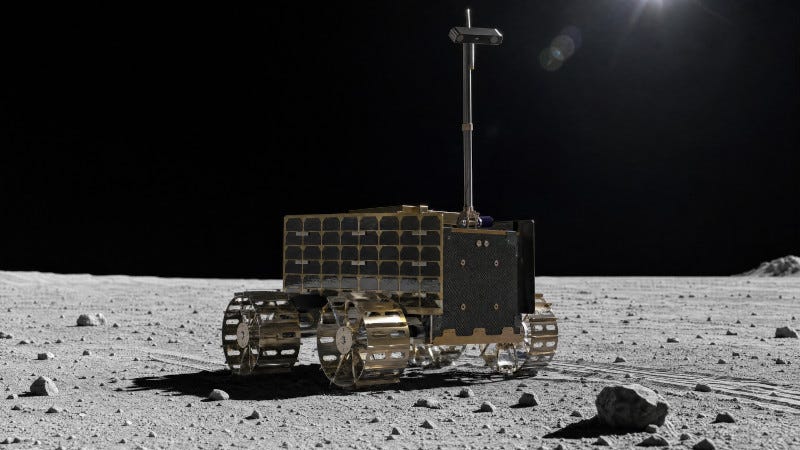
The European Space Agency has agreed to fund the complete development and lunar flight of MAGPIE, Europe’s first rover designed to search for ice at the moon’s south pole.
“(MAGPIE will) provide critical knowledge for the next phase of lunar exploration.”
Sara Pastor, ESA
ESA awarded Phase 2 of the MAGPIE contract — the Mission for Advanced Geophysics and Polar Ice Exploration — to ispace-EUROPE S.A., the Luxembourg-based European arm of Japanese lunar company ispace, inc., the company said in a July 24 news release. Phase 2 began July 1, 2026, and covers rover and payload development, manufacturing, testing, transport to the lunar surface and surface operations.
The contract is valued at €65 million, or roughly $74 million at current exchange rates, according to ispace-EUROPE. Trade publications including Aviation Week’s Aerospace Daily & Defense Report and European Spaceflight reported the same figure this week, though each traces the number back to the same company announcement rather than to an ESA contract notice or spokesperson.
MAGPIE falls under ESA’s small-missions initiative for lunar exploration, a program the agency opened to fund efforts aimed at flying pilot missions to the moon between 2028 and 2030. When ESA first called for proposals under that initiative, it capped total mission cost at €50 million and required development from kickoff to launch in under 4.5 years. The MAGPIE contract’s €65 million value exceeds that original ceiling. According to European Spaceflight, ESA did not respond to questions about the discrepancy before that outlet’s publication.
MAGPIE is scheduled to fly aboard ispace’s Mission 4 lander in 2029. That transportation has not yet flown, and the date represents a target rather than a confirmed launch window. The ride is enabled by a separate arrangement between ESA and the Japan Aerospace Exploration Agency, which in January selected ispace to implement a high-precision lunar polar landing project under Japan’s Space Strategy Fund.
Under the contract, ispace-EUROPE will act as mission prime, overseeing mission design, rover development, payload integration and mission operations, and will also deliver the scientific data collected on the surface to ESA. Sophia Casanova, senior lunar exploration scientist at ispace-EUROPE, will serve as principal investigator for MAGPIE.
The award follows completion of MAGPIE’s Design Prototype Review. The next milestone is the Structural Thermal Model Manufacturing Readiness Review, with work on it already underway.
Julien-Alexandre Lamamy, CEO of ispace-EUROPE, said the contract “demonstrates ESA’s commitment to a new model for small, agile exploration missions — one that combines commercial delivery, scientific ambition and international collaboration.”
Sara Pastor, ESA’s lunar program manager, said MAGPIE will “provide critical knowledge for the next phase of lunar exploration” by characterizing volatile deposits and searching for water ice in the lunar polar regions. She said the mission also reflects “growing cooperation between ESA and JAXA in lunar exploration.”
ispace-EUROPE built TENACIOUS, the first European-designed and -assembled lunar rover to reach space, which flew on ispace’s Mission 2. ESA has not issued its own statement confirming the MAGPIE award as of this writing.