

European Launch Capacity as a U.S. Supply Chain Hedge
PLD Space Raises $209.5M in Series C Round

What This Means
PLD Space’s $209.5M Series C is not a European launch story. It is a supply chain hedge story. As U.S. tariff pressure and International Traffic in Arms Regulations (ITAR) complexity push satellite operators to reconsider their single-source dependency on American launch providers, a vertically integrated European small-lift vehicle with a non-U.S. supply chain and a spaceport in Kourou is no longer just a regional option. For program managers, constellation operators, and investors evaluating launch provider concentration risk, PLD Space’s arrival at commercial scale in 2027 creates a credible alternative node in the global launch supply chain for the first time since Arianespace’s dominance faded. The question is not whether PLD will compete with SpaceX. The question is whether the operators in your portfolio have already mapped their launch dependency risk before the window closes.
Spain’s PLD Space closed a €180 million (≈$209.5 million) Series C round on March 4, 2026, led by Mitsubishi Electric Corporation and joined by Spain’s CDTI Innvierte fund, COFIDES (Compañía Española de Financiación del Desarrollo), and Nazca Capital, pushing the company’s total funding past €350 million (≈$407 million). In April 2026, the European Investment Bank (EIB) added a €30 million (≈$34.9 million) venture debt facility, its first direct investment in a small satellite launcher, bringing PLD Space’s total 2026 fundraising to €210 million (≈$244 million) and cumulative funding past €380 million (≈$441 million). The round’s strategic geometry, a Japanese industrial giant anchoring, European public funds reinforcing, and commercial customers pre-booking launches for 2027, tells a supply chain story that executives and investors dependent on U.S. launch capacity should not ignore.
The Signal Behind the Round
The conventional read on PLD Space is a European challenger trying to carve market share in the small-satellite launch segment. The more decision-relevant read is that this round operationalizes a non-U.S. launch supply chain node at exactly the moment the cost of U.S. launch dependency is rising. U.S. tariff escalation under the Trump administration has introduced supply chain delays, higher component costs, and reduced investor confidence across cross-Atlantic aerospace supply chains, according to Marco Aliberti, associate manager and lead on international engagement at the European Space Policy Institute (ESPI). ITAR controls, always a friction point, compound the risk for non-U.S. satellite operators who route payloads through American launch providers — adding re-export authorization complexity and compliance cost to the launch procurement calculus. PLD Space’s vertically integrated model — its TEPREL-C engines, turbopumps, and cryogenic valves all designed and manufactured in-house in Elche, Spain — presents a structurally different supply chain exposure profile than any currently operational U.S. launch provider.
The Vehicle and the Infrastructure Map
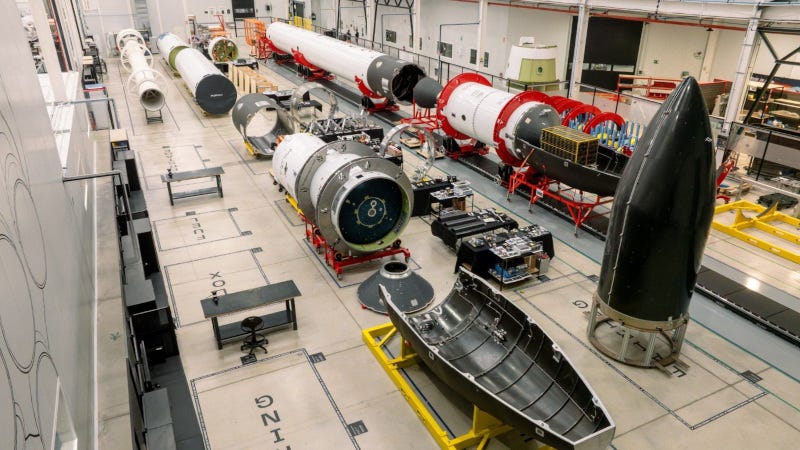
MIURA 5 is a two-stage liquid-fueled launch vehicle designed to place approximately 1,080 kg into low Earth orbit (LEO), targeting the dedicated small-satellite launch market. The vehicle’s propulsion stack is notable for its supply chain logic: PLD Space built the largest turbopumps developed by a private company in Europe entirely in-house (a figure based on company technical disclosures and not independently benchmarked against all European competitors), completed integrated TEPREL-C hardware testing by April 2025, and entered flight qualification in mid-2025. The first MIURA 5 demonstration flight is planned for 2026 from the Guiana Space Centre (CSC) in Kourou, French Guiana, following completion of the launch pad civil engineering — targeted for July 2026 — with a second demonstration flight planned for late 2026 or Q1 2027. Commercial operations with four contracted launches are scheduled to begin in 2027, supported by launch insurance access tied to successful demonstration flight completion. By 2030, PLD Space is targeting more than 30 launches per year across multiple launch sites.
