

Europe Charts Road Map for Domestic Plutonium-238 Production
Study Confirms Technical Feasibility but Flags Coordination as the Real Hurdle

A European study commissioned by the European Space Agency has confirmed that an independent supply chain for plutonium-238 — the radioisotope used to power deep-space missions — is achievable using infrastructure already in place on the continent, with a road map running through 2039.
“It’s not a matter of capabilities, we have the raw material and reactors to irradiate it and the knowhow and systems to do so.”
Brieuc Spindler, Tractebel Engie
The study, called Optimum Pro and conducted under ESA’s ENDURE program, was carried out by Tractebel Engie with support from Belgium’s nuclear research center SCK CEN. It examined the technical, regulatory, safety, economic, and infrastructure requirements for establishing a European Pu-238 supply chain from end to end.
The report found no barriers on the technical or safety fronts. The sticking points are organizational: coordinating stakeholders, securing supply chains, and aligning regulatory processes across multiple member states.
“Producing Pu-238 is feasible and the assets already exist in Europe,” said Brieuc Spindler, lead engineer at Tractebel Engie. “It’s not a matter of capabilities, we have the raw material and reactors to irradiate it and the knowhow and systems to do so.”
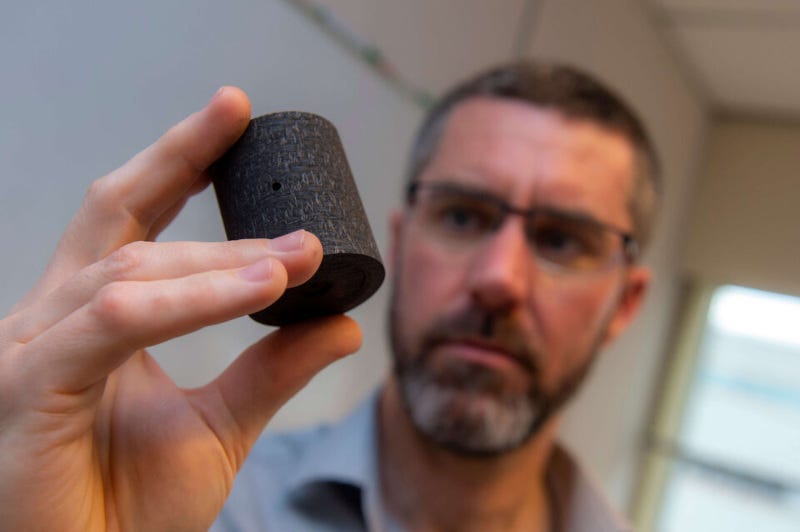
Pu-238 production begins with neptunium-237, a byproduct already recovered from nuclear fuel reprocessing that is currently routed to the waste stream. The neptunium is formed into oxide pellets and placed in a high-neutron-flux research reactor, where it absorbs neutrons and gradually converts to Pu-238 through radioactive decay. The material must then cool for up to two years before chemical separation yields a product suitable for space power systems.
Europe’s existing reactor infrastructure — including Belgium’s BR2 research reactor and France’s Jules Horowitz Reactor, currently under development — provides a ready-made platform for that process.
ESA estimates it would need at least 300 grams of Pu-238 per year to meet the needs of its deep-space mission portfolio. The study found that cost, while substantial, would represent only a small percentage of ESA’s annual budget.
Pu-238 has long been the benchmark fuel for radioisotope power systems. Every Apollo mission, every Mars rover, and most deep-space probes have relied on it. Currently, only the United States and Russia produce it in meaningful quantities.
ESA’s ENDURE program — European Devices Using Radioisotope Energy — was originally focused on americium-241, seen as the only viable option given geopolitical constraints on Pu-238 supply. The Optimum Pro study represents an expansion of that scope.
Spindler outlined the technical case for plutonium over americium. “On paper, plutonium has a better ratio of power to kilograms when you compare it with americium, meaning its power systems can be lighter and less bulky,” he said. “It also only produces alpha radiation. You can stop it with a sheet of paper, while americium needs to be encased in lead.”
The power-to-mass advantage becomes critical as missions travel farther from the sun, where solar panels lose efficiency. Ruben Van Parys, a lead engineer on the project from Tractebel, put it in operational terms. “Pu-238 may be more expensive upfront but it might make missions cheaper ultimately because it gives more power per kilogram,” Van Parys said.
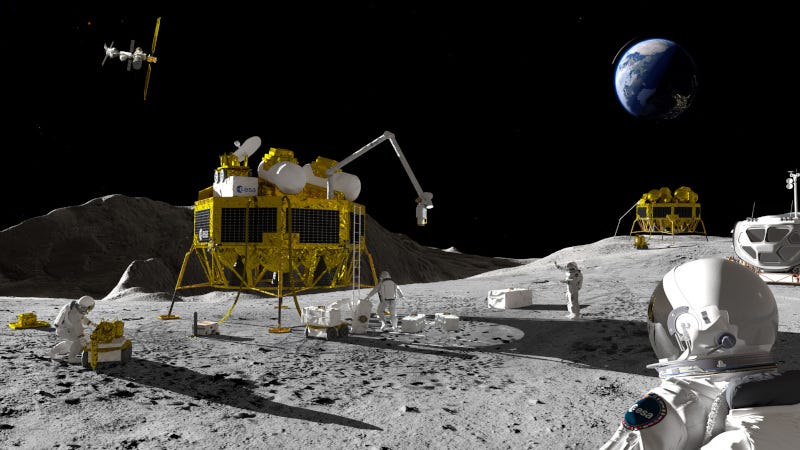
Spindler pointed to lunar operations as a near-term use case. “Europe doesn’t just want to reach the Moon, others are already on that path. It wants to survive the lunar night, which would be a real differentiator,” he said. “If we are on the Moon, with that capability it would set Europe apart.”
Kenza Benamar, R&D engineer at ESA for the GSTP/ENDURE program, framed the effort as a collective investment question. “Given the magnitude of the investment required, only a collective European initiative can ensure the establishment of Pu-238 production for deep space exploration, delivering substantial economic impact across the region, strengthening international cooperation, and enabling access to the farthest reaches of our solar system,” Benamar said.
The road map outlined in the report runs from the present through 2039, covering the ramp-up of production capacity. ENDURE was previously funded under ESA’s General Support Technology Program and now sits under ESA’s Human and Robotic Exploration directorate. ESA has not announced a next decision point or funding commitment tied to the study’s findings.