

Engine Breakthrough Funding Backs Rotating Detonation Rocket Development
Series B Round Targets Transition From Flight Test To Deployable Propulsion Systems

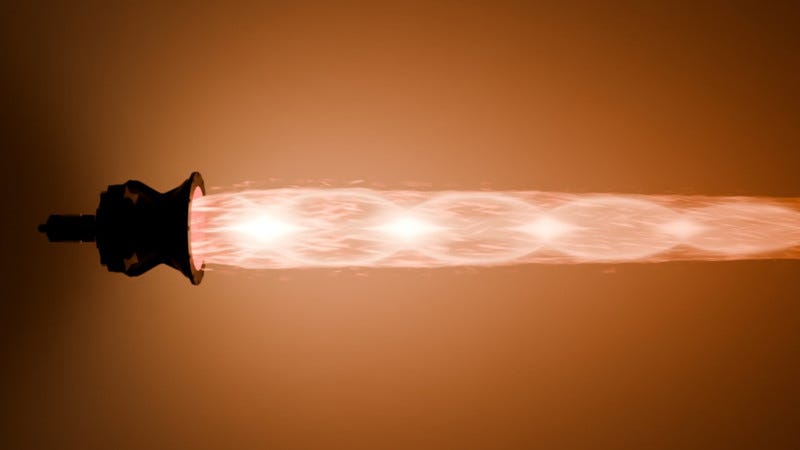
Venus Aerospace has closed a $91 million Series B funding round to mature its high-thrust rotating detonation rocket engine from a flight-proven prototype into full propulsion systems for defense and space customers. The financing follows the company’s first successful flight test of a high-thrust rotating detonation rocket engine (RDRE) in May 2025 and comes as demand grows for longer-range and higher-speed systems.
“This financing marks an important step in moving Venus from breakthrough demonstration to scaled capability.” Sassie Duggleby, Venus Aerospace
Houston-based Mercury Fund led the round, joined by Lockheed Martin Ventures, MESH, PEAK6, Draper Associates, Starboard Star Venture Capital, Green Sands Equity, Seraph Group, Trousdale Ventures and other new and existing strategic and institutional investors. Venus said the new capital will support scaling development and production as it moves its RDRE from demonstration toward deployment across a range of near-term defense and space applications. The company argues that current propulsion systems struggle to meet customer requirements for range, performance and domestic production, and says it is building to close that gap.
The funding announcement follows the appointment of former NASA Deputy Administrator Pam Melroy to the Venus Aerospace board of directors.
Rotating detonation rocket engines differ from conventional rocket engines, which burn fuel through subsonic combustion. Venus’ RDRE uses a continuous supersonic detonation wave that rotates around the combustion chamber, an approach the company says has produced the most efficient rocket engine architecture ever flown, with an efficiency gain of about 15 percent over traditional designs. According to Venus, that efficiency margin can translate into extended range, greater payload flexibility and higher-performance systems in missions where margins are tight.
The engine is built from 3D-printed components and standard materials and is intended for domestic manufacturing at scale through supply chains that avoid constrained or foreign-sourced parts. Venus describes the RDRE as reusable and throttleable, with potential roles in munitions, space launch, orbital transfer and lander missions. Rather than develop separate engines for each use case, the company is pursuing a common propulsion architecture aimed at serving multiple mission classes.
Demand for hypersonic and long-range capability is rising as the United States and allied nations work to field systems that can fly faster and reach farther than legacy platforms, according to Venus. The company is building its engines in Texas with U.S. engineering talent for customers seeking what it calls reliable, sovereign propulsion capability.
“This financing marks an important step in moving Venus from breakthrough demonstration to scaled capability,” said Sassie Duggleby, co-founder and CEO of Venus Aerospace. “Our customers need propulsion systems that go farther, can be produced reliably and are built on supply chains they can trust. We are advancing that capability with American engineering and manufacturing talent to strengthen U.S. defense, expand space access and support the future of high-speed flight.”
“Venus is exactly the kind of company Houston capital should be backing,” said Blair Garrou, co-founder and managing partner at Mercury Fund. “It combines multiple frontier technologies, domestic manufacturing and clear commercial and national security relevance. We believe this team is positioned to lead an important new chapter in defense and space, and we are proud to support a company building breakthrough technology here in Texas.”
“Lockheed Martin Ventures invests in technologies to help increase mission effectiveness,” said Chris Moran, vice president and general manager of Lockheed Martin Ventures. “Since our initial investment, Venus has progressed very quickly in its technology development. Our reinvestment in Venus recognizes Venus’ accomplishments to date and focus on speed to manufacture, cost management and reduction of supply chain constraints. Venus is working effectively to position its propulsion system for the production scale required by defense programs.”
“This capital allows us to move from successful flight demonstration toward deployable propulsion systems,” said Andrew Duggleby, co-founder and CTO of Venus Aerospace. “What differentiates our RDRE is not just that it works, but that it has flown at high thrust and was designed with scale, manufacturability and mission integration in mind. Our propulsion architecture combines efficiency, throttling, reusability and manufacturability in a way that customers need for real defense and space missions. We are focused on translating technical progress into reliable systems for operational use.”
Venus said it completed the world’s first flight test of a high-thrust rotating detonation engine in May 2025, reaching that milestone in just over four years on 80 million dollars in capital. The company characterized the effort as one of the fastest and most capital-efficient rocket engine development programs of its kind.