

D-SAIL Equipped Demonstration Satellite Launched by Rocket Lab
Will Be Operated in Orbit for the First Time Starting in Late 2026

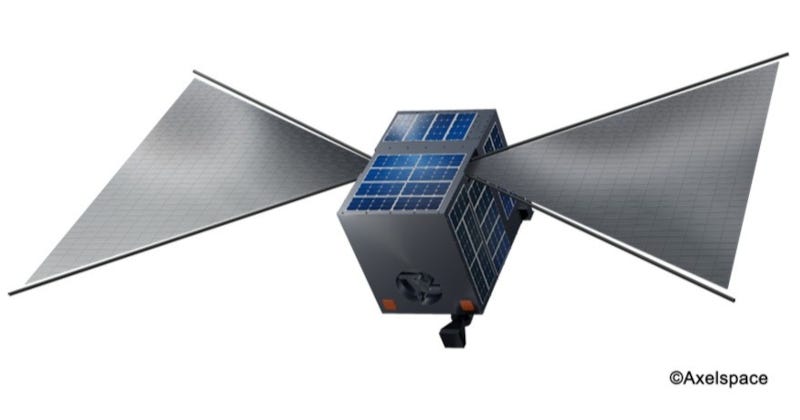
When Rocket Lab launched the “Raise and Shine” mission December 15, it carried an orbital debris mitigation demonstration project developed by Axelspace. D-SAIL is a deorbiting device designed to shorten the time a satellite remains in orbit after the termination of its operation.
“This dedicated mission delivered precision and reliability for one of the world’s most respected space agencies.”
Sir Peter Beck, Rocket Lab
The demonstration is part of a JAXA program named ‘Innovative Satellite Technology Demonstration-4’. The D-SAIL demonstration on the RApid Innovative payload demonstration SatellitE-4 (RAISE-4) mission is scheduled to begin in late 2026, about a year after launch. This will mark the first time that D-SAIL is operated in orbit.
The D-SAIL membrane, which is approximately 21.5 square feet and a few tens of micrometres in thickness, is deployed to increase atmospheric drag, gradually reducing the satellite altitude, in order to encourage satellite’s entry into the atmosphere.
Axelspace has established the “Green Spacecraft Standard,” a guideline for satellite development and operation that promotes Earth and space sustainability. This adopts comprehensive initiatives throughout the satellite lifecycle, and as part of this, Axelspace has jointly developed D-SAIL with SAKASE•ADTECH CO., LTD. Axelspace equips its versatile satellite bus system with D-SAIL as a standard feature.
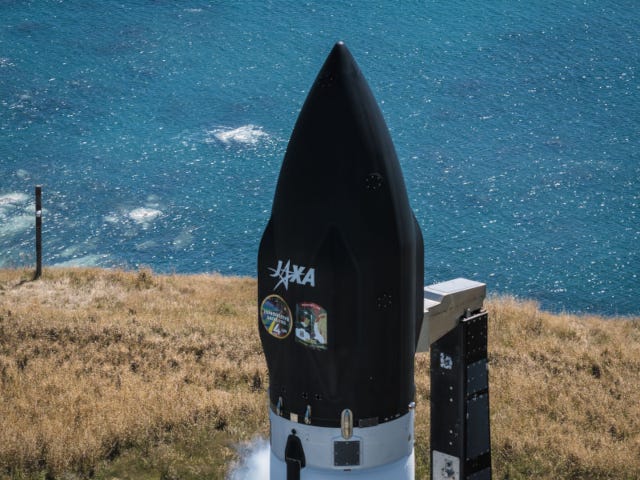
“This dedicated mission delivered precision and reliability for one of the world’s most respected space agencies, and we couldn’t be prouder of supporting JAXA with the dedicated access to space needed to support the growth of Japan’s aerospace economy,” said Rocket Lab Founder and CEO Sir Peter Beck. “We’re proud to continue delivering the responsiveness and performance that Japan’s satellite operators have come to rely on.”
There is a growing global demand to mitigate the accumulation of space debris, exemplified by the adoption of FCC rules requiring satellite operators in low-Earth orbit to dispose of satellites within 5 years of completing their missions. Since the Green Spacecraft Standard not only complies with existing rules but also takes into consideration areas that have not yet been regulated—such as manufacturing on the ground and operation in orbit—Axelspace aims to promote sustainability within the space industry through these advanced efforts.