

Blue Moon Lander Clears Critical Thermal Vacuum Test at Johnson Space Center
Uncrewed Cargo Spacecraft Named ‘Endurance’ Advances Toward Late 2026 Lunar Launch

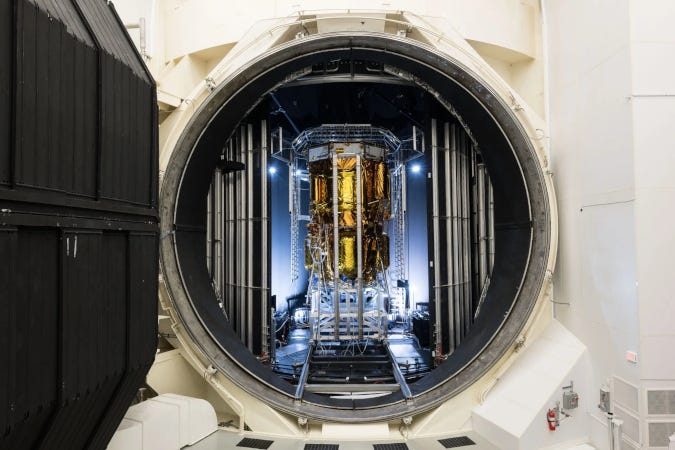
Environmental testing of the Blue Moon Mark 1 lunar lander has been completed inside one of the world’s largest thermal vacuum test facilities, clearing a key preflight milestone for the uncrewed spacecraft targeted to land near the Moon’s South Pole later this year.
The lander — a liquid hydrogen-powered cargo spacecraft known as the Blue Moon Mark 1, or MK1 — finished its testing campaign inside Thermal Vacuum Chamber A at NASA’s Johnson Space Center in Houston, the same facility used to certify Apollo-era hardware for flight. The vehicle, christened Endurance after the ship that carried British explorer Ernest Shackleton’s legendary expedition to Earth’s South Pole, is now one step closer to its targeted launch on Blue Origin’s New Glenn rocket.
MK1 is a commercially funded demonstration mission designed to advance Human Landing System capabilities in support of NASA’s Artemis program. The approximately 3,000-kilogram (6,600-pound) class lander is engineered as a single-launch cargo vehicle — requiring no in-space refueling — and is designed to remain on the lunar surface after touchdown.
Chamber A testing enabled engineers to replicate the vacuum of space and the extreme temperature swings the spacecraft will encounter during transit and operations on the Moon. By recreating those conditions on the ground, teams evaluated system performance and verified structural and thermal integrity of the vehicle before committing it to flight.
The lander arrived at Johnson Space Center in January 2026 after departing Blue Origin’s Florida facilities aboard a barge from Port Canaveral. It entered Chamber A in February for what became a multi-week test campaign before completing the work and beginning its return to the Space Coast for final preflight preparations.
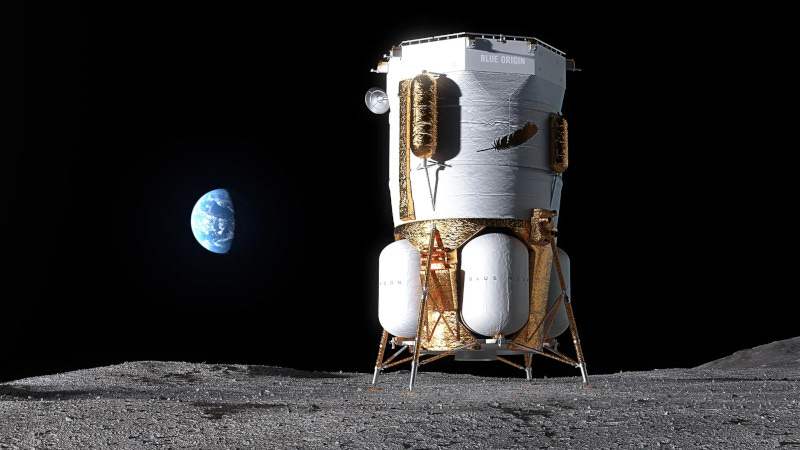
MK1’s first demonstration mission — designated MK1-SN001 — is designed to prove out a full suite of critical systems ahead of the uncrewed NASA Human Landing System mission under Artemis. Those systems include the BE-7 liquid hydrogen engine, cryogenic fluid power and propulsion systems, avionics, continuous downlink communications, and precision landing within 328 feet (100 meters) of a designated site. The mission targets a landing zone near Shackleton Crater at the lunar South Pole, a region of intense scientific and exploration interest due to its permanently shadowed areas, which are believed to contain water ice.
Completion of thermal vacuum testing represents a significant step in the certification process for a new lunar lander. TVAC testing subjects a spacecraft to the same near-absolute-zero temperatures and hard vacuum it will experience in the space environment — conditions impossible to replicate through software simulation alone. Passing this phase clears the way for the final sequence of integration and pre-launch activities at the launch site.
The Blue Moon MK1 program is one part of a broader commercial lunar architecture Blue Origin is developing under NASA’s Human Landing System initiative. Subsequent vehicles — MK1-SN002 and beyond — are intended to be available to payload customers once the demonstration mission validates the system’s core capabilities.
With thermal vacuum testing behind it, Endurance is expected to complete its return to Florida for final preflight checkouts before its New Glenn launch, targeted for late 2026. A successful mission would make it the first Blue Origin spacecraft to reach the lunar surface and one of the few commercially developed cargo landers to do so.