


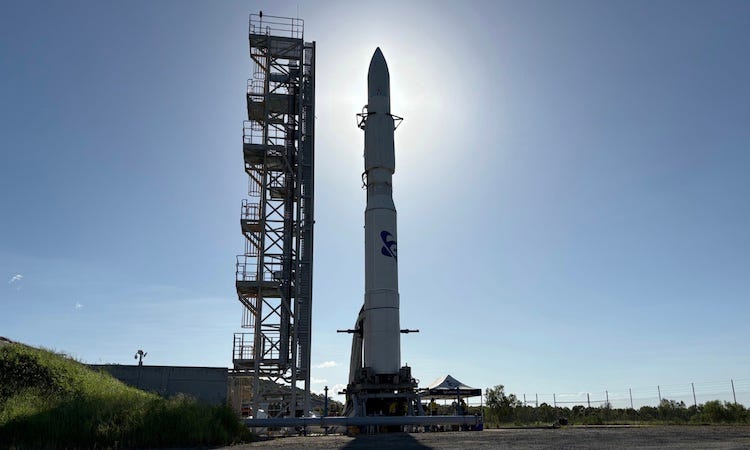
In January 2026, Queensland-based launch company Gilmour Space announced a $45 million (U.S.) Series E round, led by Australia’s National Reconstruction Fund (NRF) and superannuation investor Hostplus, taking its total private funding above $217 million (AU) and pushing its valuation beyond the $1 billion (U.S.) mark. For Australia, this was more than another funding headline; it signaled that at least one domestic space startup is now being priced as a global growth story rather than a regional niche play. The company’s trajectory from a small Queensland workshop to a billion-dollar enterprise in the space of a decade marks one of the more striking capital market developments in Australian technology history — and it raises a question that the broader investment community cannot easily sidestep.
That shift sits at the heart of the current tension in Australia’s space market. Deal flow and valuation step-ups are accelerating in a country whose domestic space budget and customer base remain modest by US standards, and whose capital stack is still heavily shaped by government programs, sovereign vehicles, and US-linked partnerships. The question for founders, investors, and corporate strategists is whether today’s pricing reflects durable access to global demand or optimistic extrapolation from a small but fast-moving set of flagship deals. That question is not rhetorical: the answer will determine whether Australia’s space sector matures into a diversified, export-led industry or experiences a painful correction as reality catches up with valuations.
From Niche Player to Growth Market: Australia’s Space Industry in 2026
Australia’s space ambitions are unfolding within a global industry that consultancy Novaspace projects will reach roughly $944 billion by 2033, driven by launch, satellite communications, Earth observation, and in-space services. While Australia today accounts for only a small fraction of that total, government and industry analyses consistently frame space as a growth sector central to the country’s broader economic and technological renaissance. Public documents from the Australian Space Agency (ASA) and Organization for Economic Co-operation and Development (OECD) policy dashboards highlight targeted efforts to lift Australia’s share of global space activity over the coming decade via launch capability, satellite manufacturing, and downstream services. The ambition is significant: from a standing start in the modern commercial sense, Australian policymakers and industry leaders are arguing that geography, allied relationships, and industrial policy can together create a globally competitive space sector.
On the ground, the sector no longer looks like a scattered collection of research projects. Gilmour Space’s progress toward orbital capability, Fleet Space Technologies’ expansion in Adelaide, and the emergence of multiple prospective spaceports in Queensland and South Australia mark a shift toward commercial infrastructure and product platforms. Fleet Space’s SpaceTech Hyperfactory, inaugurated in 2025, is designed to produce thousands of geophysical sensors and hundreds of satellites per year, signaling that at least some Australian players are building for export-scale volumes rather than purely domestic demand. These developments sit alongside a widening downstream ecosystem in areas such as geospatial analytics, mining and agriculture services, and defense-oriented sensing — all of which benefit from the expanding availability of satellite data and communications infrastructure that domestic launch capability would help secure.
