

Arizona State University LEO-TIMS Camera Flies on Aurora Spaceplane
The First University-Built Camera to Operate in Near-Space Conditions

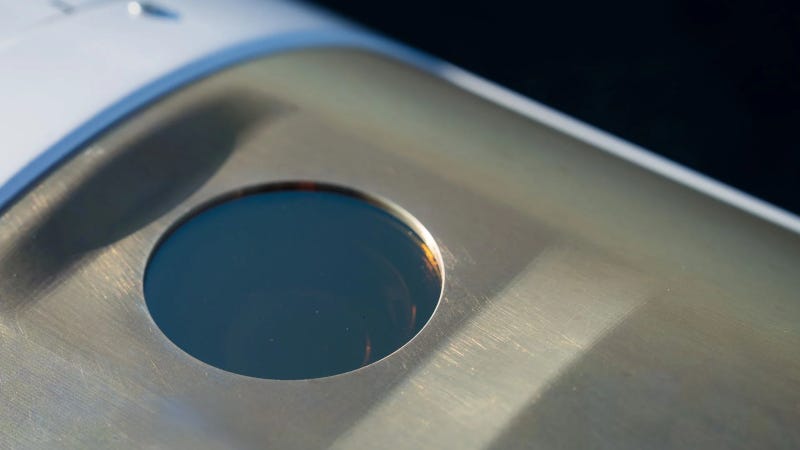
While rockets dominate how we imagine space research and Earth observation, a recent collaboration between Arizona State University (ASU) and Dawn Aerospace offered a glimpse of a different approach. Not a replacement for orbital missions, and not an attempt to shortcut rigor, but a complementary way to test real spaceflight hardware in conditions that are close enough to matter and forgiving enough to iterate.
“Normally, a NASA mission takes ten years from idea to data. With Aurora, it was four months.”
Professor Phil Christensen, ASU
ASU successfully flew a thermal-infrared camera aboard Dawn Aerospace’s Aurora spaceplane marking one of the first university-built cameras to operate in near-space conditions aboard a reusable suborbital vehicle.
The payload, known as LEO-TIMS, is a compact thermal-infrared imager derived from heritage instruments that ASU has previously flown to Mars and soon to Europa, Jupiter’s icy moon, adjusted for LEO in a suborbital flight. Led by geologist, Professor Phil Christensen and mechanical engineer Ian Kubik, the mission sought to test how a scaled-down version of a planetary science camera performs in a fast, recoverable, and re-flyable environment.
“We’ve sent similar cameras to Mars and even to Europa,” said Christensen. “This project challenged us to take that same engineering and make it smaller, lighter, and dramatically cheaper so we could fly it on a spaceplane and collect real Earth data in months, not decades.”
For the ASU team, the timeline alone was revealing. From the start of the project to the first data was roughly four months. In planetary science, that kind of cadence is almost unheard of.
“Normally, a NASA mission takes ten years from idea to data,” Christensen said. “With Aurora, it was four months.”
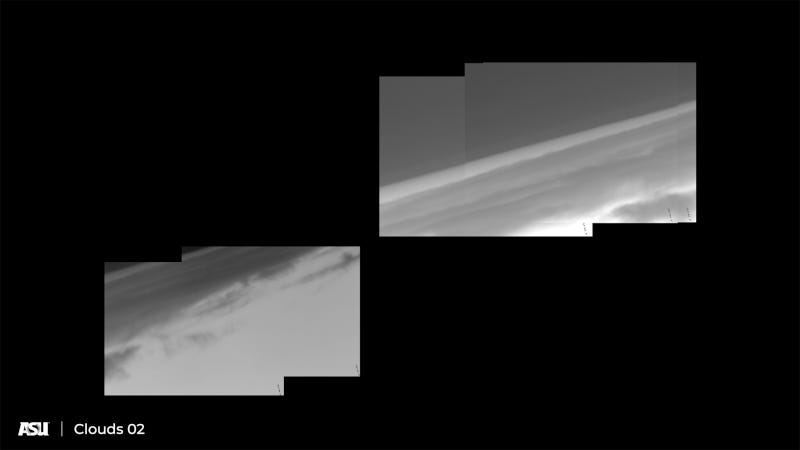
During the flight, the camera recorded continuously, from before take-off through to landing. It captured infrared imagery of clouds, ocean, coastlines, and the curvature of the Earth. At one point, the instrument even imaged the Sun directly, a scenario the team had anticipated, modeled, and tested extensively at ASU. The camera came back intact, with no discernible degradation.
Infrared imagery from the flight revealed subtle temperature differences across clouds and water, offering clues for future Earth observation. “Infrared tells you temperature,” Christensen explained. “You can see which areas are wet or dry, where crops are stressed, or where ocean currents are shifting. These are vital insights for understanding how Earth’s systems work.”
“As soon as it landed, I was already thinking about what we’d do differently next time,” Kubik said. “With quick turnaround, you immediately think to start designing the next experiment.”
The ASU payload was not the only one flown. Dawn Aerospace also flew a commercial SDA camera for Scout Space on the same platform, and two other university payloads as part of its Pathfinder campaign, including California State University and Johns Hopkins APL.