


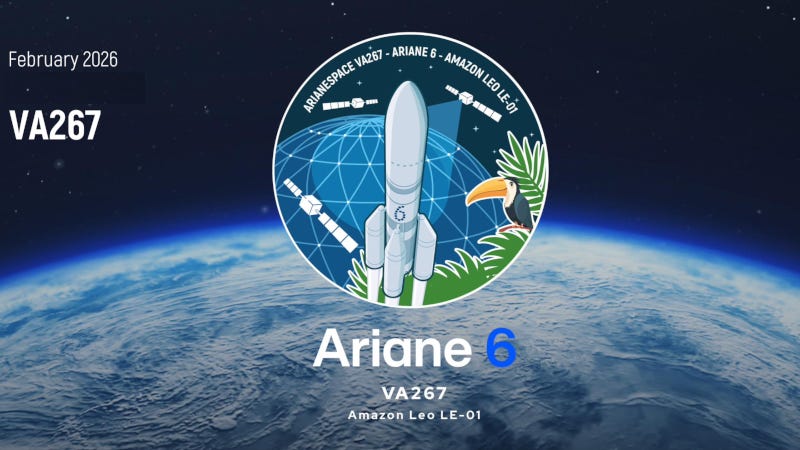
Arianespace is preparing to kick off 2026 with an ambitious mission that marks several significant milestones for Europe’s space program. On February 12, the company will launch 32 Amazon Leo satellites aboard the first-ever Ariane 64 configuration, the version of the Ariane 6 rocket equipped with four boosters.
The launch window opens at 11:45 a.m. Washington D.C. time and extends until 12:13 p.m., with liftoff scheduled from Europe’s Spaceport in French Guiana. The mission will deliver approximately 20 tons of payload to low Earth orbit at an altitude of around 465 kilometers (≈290 miles).
Designated VA267, this flight represents multiple firsts for the European space industry. It marks Arianespace’s inaugural launch for Amazon Leo, the first deployment of the four-booster Ariane 64 variant, and the first Ariane 6 mission using the extended 20-meter fairing. Perhaps most significantly, it’s the first Ariane 6 launch for a commercial customer.
The mission will add 32 satellites to Amazon’s growing constellation, bringing the total number of Amazon Leo satellites in orbit to 212. This launch is the first in a planned series of 18 Ariane 6 missions dedicated to building out Amazon’s satellite network.
Amazon Leo is designed to deliver fast, reliable internet service to customers and communities currently beyond the reach of existing networks. The full constellation design calls for more than 3,000 satellites operating in low Earth orbit between 590 and 630 kilometers altitude. The system comprises three main components: ground infrastructure with gateway and telemetry antennas, the satellites themselves that relay data traffic, and customer terminals including the Leo Nano, Leo Pro, and Leo Ultra antennas that deliver connectivity to end users.
The nominal mission duration from liftoff to separation of all satellites is scheduled for 1 hour and 54 minutes. The Ariane 6’s upper stage will perform multiple engine burns to precisely deploy the satellites, with separations beginning 1 hour and 29 minutes after liftoff and concluding 25 minutes later. A key innovation enabling this constellation deployment is the Auxiliary Propulsion Unit on Ariane 6’s upper stage. This system provides continuous low thrust to maintain the stage’s trajectory and altitude, ensuring safe separation and spacing of the satellites within a short timeframe. After satellite deployment, the APU will facilitate a controlled deorbit of the upper stage.
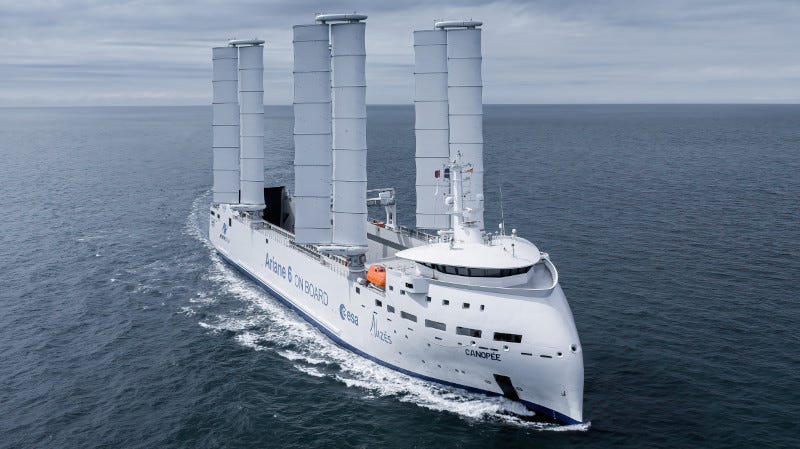
The Amazon Leo satellites arrived in French Guiana in late November 2025, with preparation and assembly operations beginning in early December. The Ariane 6 stages arrived aboard the Canopée ship on January 2, 2026, with launcher assembly beginning shortly thereafter. Following integration of the satellites under the fairing on February 5, the complete payload stack was transferred to the launch zone on February 9. A Launch Readiness Review is scheduled for February 11, with final countdown operations beginning on launch day.