

Acquisition Targets Chinese Supply Chain Dominance in Satellite Power Components
York Space Acquires Solar Cell Maker Solestial in $67 Million Deal

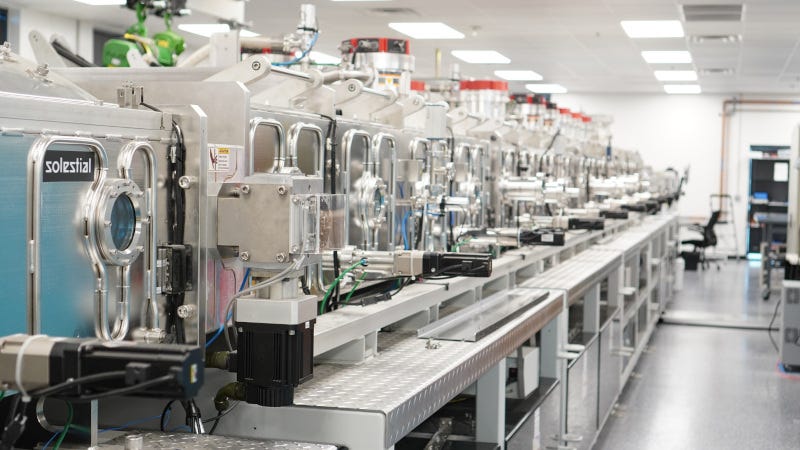
York Space Systems has closed its acquisition of Solestial, Inc., a Tempe, Arizona-based manufacturer of silicon solar cells engineered for the space environment, for approximately $67 million in a mix of cash and stock.
“Controlling our supply chain is a core part of how York delivers for our customers, and space solar has been a critical gap the industry has largely ignored.”
Dirk Wallinger, York Space Systems
The transaction closed June 4, 2026. York paid using a negotiated share value of $34.00 per unit, issuing 1,703,577 shares of its common stock to Solestial’s sellers.
The deal addresses a supply chain vulnerability that York says runs through the core of the satellite manufacturing industry. China controls 99% of the gallium and more than 60% of the germanium required for the legacy III-V solar cells used in most spacecraft today. It also produces 93% of the world’s polysilicon used in terrestrial solar panels. York argues that satellite manufacturers without a domestic alternative face mounting risk as trade restrictions tighten.
“Controlling our supply chain is a core part of how York delivers for our customers, and space solar has been a critical gap the industry has largely ignored,” said Dirk Wallinger, CEO of York. “Solestial’s solar cells are produced in the U.S. and will ultimately source raw material from U.S. suppliers, creating a complete U.S. solar cell production ecosystem.”
Solestial’s cells use thin, flexible silicon rather than the III-V multijunction technology that dominates the current market. The company says its cells self-heal radiation damage at operating temperatures as low as 149°F (65°C) — a property independently verified by France’s Alternative Energies and Atomic Energy Commission (CEA). On-orbit telemetry from one year in low Earth orbit showed no additional degradation in Solestial cells compared to adjacent III-V multijunction cells.
Approximately 95% of Solestial’s supply chain is already U.S.-based. The company manufactures its cells and flexible solar power modules at its Tempe facility on automated production lines the company says can achieve lower costs than traditional III-V products. Legacy III-V alternatives carry lead times exceeding two years and face scaling challenges against accelerating satellite production demand.
“We’ve proven on orbit that our self-healing solar cells outlast terrestrial solar alternatives,” said Margo de Naray, CEO of Solestial. “Now we’re positioned to scale that technology with a U.S.-sourced supply chain and deliver it at the volume the industry needs.”
Solestial will operate as a wholly owned subsidiary of York and will continue supplying solar technology to external customers outside York’s own spacecraft portfolio.