

SpaceX’s SPCX Prospectus Bundles Two Businesses into One Stock
That’s the Real Risk for Investors

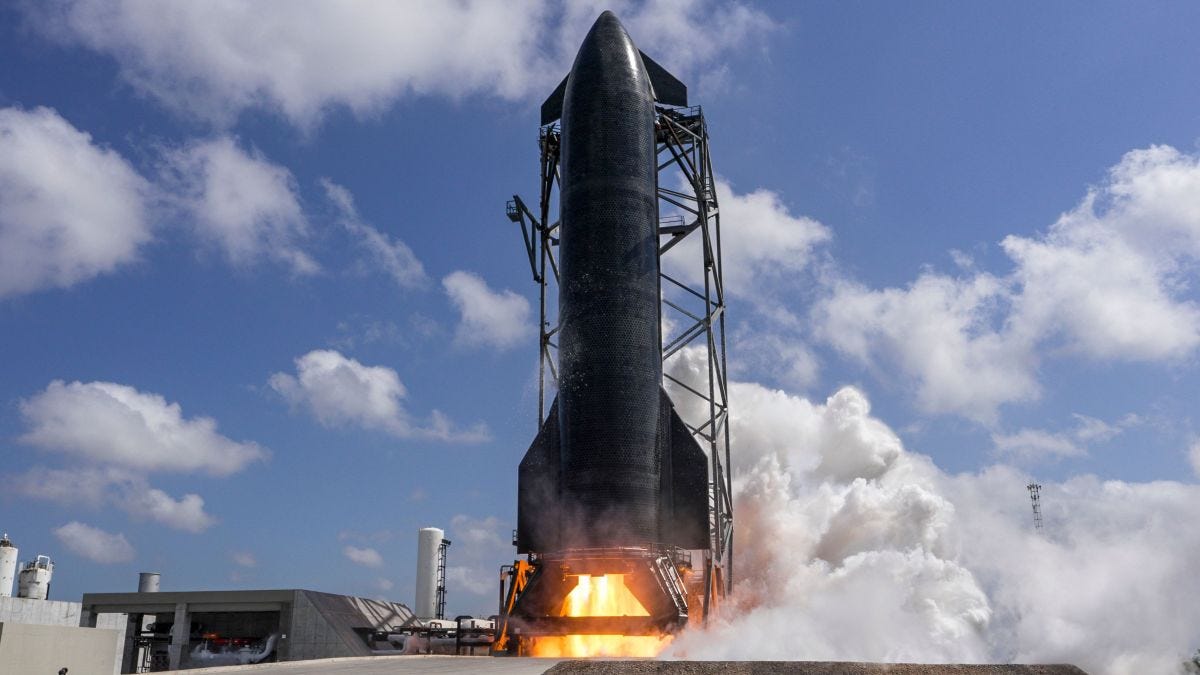
What This Means:
SpaceX filed a Form S-1 registration statement ahead of its June 11, 2026 listing on the Nasdaq exchange under the ticker SPCX. That filing reports Starlink and Starship as a single consolidated entity rather than as separate financial segments. That reporting structure, not the headline 19% first-day pop, is the signal investors need to price. Anyone modeling SPCX as one growth story is actually underwriting two very different businesses, a maturing subscription network and a capital-intensive development program, without the disclosure needed to weight them separately.
Signal Statement
SpaceX priced its Initial Public Offering (IPO) on June 11, 2026, and closed its Nasdaq debut at $161 per share, up 19% on day one and up another 20% the following session, making it the largest IPO in stock market history by several measures already circulating among sell-side desks. That price action is the story every outlet covered. The story JOSC is flagging instead sits inside the S-1 itself: SpaceX filed as a single reporting entity, with no segment-level income statement separating Starlink’s subscription revenue from Starship’s development costs. For an investor trying to build a defensible valuation model, that omission is the load-bearing fact. It means the market is pricing a blended growth rate and a blended margin profile onto two businesses that behave nothing alike, one a recurring-revenue broadband operator approaching maturity, the other a still-unprofitable heavy-lift program absorbing billions in capital expenditure with no near-term commercial payback.
Data Foundation
The publicly available record establishes three facts with reasonable confidence, and a fourth that requires explicit qualification.
First, the listing mechanics are Class 1 confirmed. SpaceX’s registration statement with the U.S. Securities and Exchange Commission (SEC), filed in early June 2026 ahead of the offering, and the company’s own investor communications establish the ticker (SPCX), the exchange (Nasdaq), the pricing date (June 11), and the debut close ($161, up 19% on day one, with a further 20% gain the following trading session). Given the scale of this transaction, readers should confirm the exact filing details directly against the SEC EDGAR database before acting.
Second, SpaceX’s vertical integration posture is well documented in company disclosures and is material to any margin analysis. The company has stated it produces solar array elements, Ka-band antenna components, and payload channel hardware in-house at its Washington state facility. That insourcing matters because it directly affects Starlink’s cost of goods sold. A satellite operator that manufactures its own antenna arrays and RF components carries a different capital and margin structure than one buying from third-party suppliers such as L3Harris or Comtech, and it is precisely the kind of detail an investor needs before applying an off-the-shelf satellite broadband margin comparable to Starlink.
Third, the $60 billion acquisition of Cursor, an artificial intelligence (AI) firm, closed during the same 30-day window as the IPO. That deal represents the largest vertical integration move by a space prime into AI-driven operations software to date, and it lands on SpaceX’s post-IPO balance sheet as either a cash outlay, a stock-for-stock exchange, or a combination, with corresponding goodwill and integration costs that will affect near-term reported earnings regardless of how the underlying technology eventually performs. Given the size of this transaction, investors should confirm exact deal terms against SpaceX’s own dated release before modeling its earnings impact.
The fourth item, and the one investors should treat with the most caution, is any specific gross margin percentage attributed to Starlink or Starship individually. Our take is SpaceX has periodically disclosed Starlink subscriber counts and coverage milestones in press statements over the past several years, but neither those statements nor the S-1 as filed break out segment-level revenue, cost of revenue, or operating income for Starlink versus Starship versus launch services. Any margin figure circulating in analyst notes for either business individually should be understood as a modeled estimate built from indirect inputs, capital expenditure disclosures, headcount data, launch cadence, and comparable-company benchmarks, not a confirmed company-reported figure. This is exactly the kind of decision-grade claim that requires explicit qualification rather than confident restatement.
